Brighten your projects with our free crochet flower motif pattern perfect for adding delicate floral beauty to blankets scarves and more.
Adding charm and elegance to any project becomes easy with the Free crochet flower motif pattern. This beautiful design comes from the helpful and detailed video by Crochet with Olga Dyvinets!!!, offering a seamless way to create connected floral motifs without breaking the thread. It’s an ideal choice for anyone looking to make stunning and continuous flower patterns.
Easy & Quick Free Crochet Flower Motif Pattern to Try
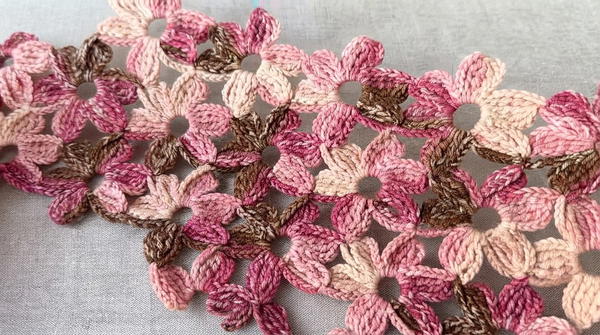
The motif features six delicate petals formed through a combination of chain loops and double crochet stitches. This creates a textured, layered look that brings depth and softness to the flower. Each flower is joined to the next as you go, resulting in a smooth, continuous panel perfect for shawls, clothes, or decorative items with a graceful flow.
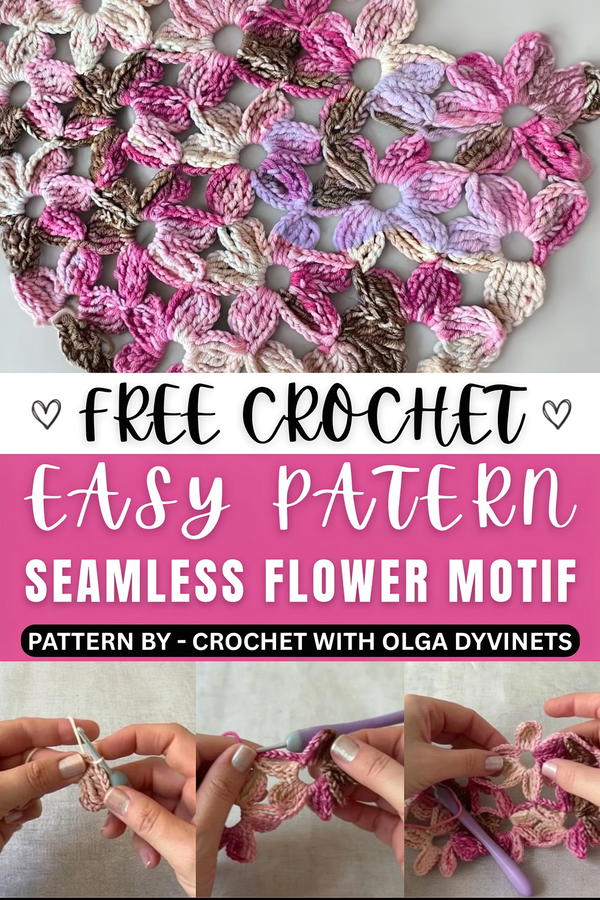
The flower’s shape is balanced and natural, with petals alternating between full and partial forms. This layout gives the piece a rhythmic and harmonious appearance. The use of fine yarn and precise stitches adds to the fabric’s gentle texture while maintaining sturdiness. The design’s standout quality lies in its intricate yet airy construction, which catches light beautifully. This pattern offers more than just beauty—it provides versatility for personal gifts or home decoration. Its elegant look can enhance scarves, cushion covers, or even table runners.
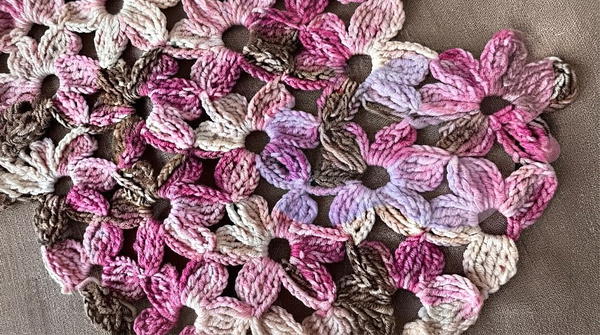
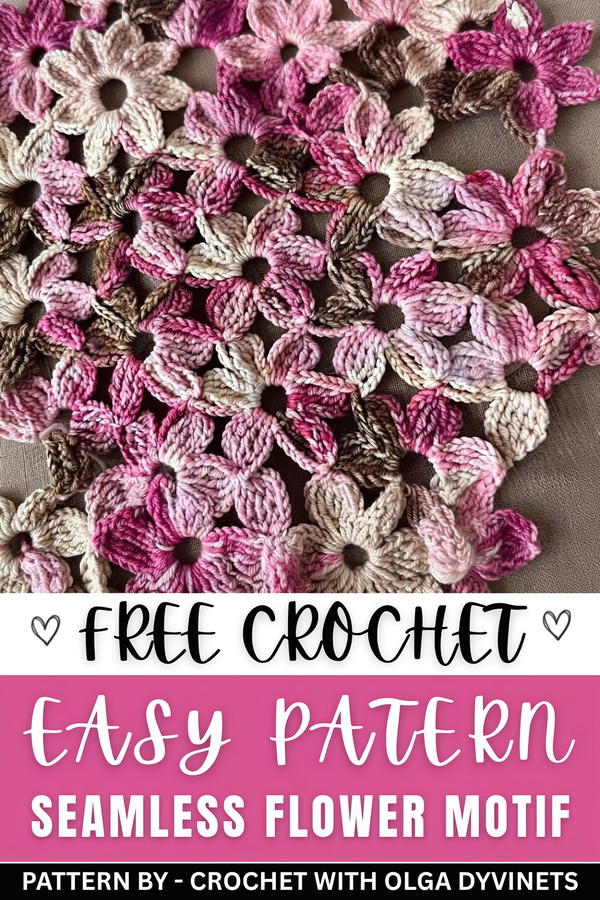
Crochet Pattern: Continuous Flower Motif
This continuous flower motif technique creates a seamless project with interconnected floral designs, achieved without cutting the yarn between flowers. Perfect for blankets, scarves, shawls, or decorative wall hangings, this approach minimizes finishing steps while showcasing a delicate pattern with consistent flow.
Skill Level
Intermediate – This project requires familiarity with chain stitches, slip stitches, double treble crochets, and joining motifs. It also includes techniques for shaping petals and joining adjacent flowers in successive rows.
Materials
- Yarn: Jeans Splash (a gradient blend of acrylic and cotton).
- Recommended yardage depends on the size of the project you intend to create.
- Hook: Size 3mm crochet hook.
- Additional Items:
- Stitch markers (optional for tracking joins).
- Scissors for trimming yarn tails.
Stitch Abbreviations
- Ch: Chain
- Sl St: Slip Stitch
- DTr: Double Treble Crochet (3 yarn overs)
- Ring: A circle created by joining chain stitches
Special Stitches
Double Treble Crochet (DTr)
- Yarn over 3 times, insert the hook into the designated stitch or space, yarn over again, and pull up a loop (5 loops on the hook).
- Yarn over, pull through 2 loops at a time until only 1 loop remains on the hook.
Petal Formation
- Each petal is composed of chain segments:
- Start a petal: Chain 6.
- Work 2 DTr (unfinished):
- Begin each DTr but leave the last loop unworked (resulting in loops being “held”).
- Yarn over and pull through all loops held.
- Chain 6 (finishing the petal).
- Sl St into the ring to join.
Useful Tips
- Placement of Petals: Ensure consistent positioning of petals on each flower, accounting for edge flowers that use fewer petals.
- Watch Joining Loops: When joining petals, ensure the loops are pulled cleanly through the correct corresponding petal from the previous flower.
- Use Stitch Markers: Mark the corners or edges to keep track of rows and to differentiate between edge flowers and full flowers.
- Tension Consistency: Maintain even tension when working chain stitches to prevent the motifs from curling or distorting.
Pattern Instructions
This pattern builds a fabric composed of interconnected flowers. It is divided into five stages: Starting the First Flower, Joining Subsequent Flowers, Completing Rows, Second and Subsequent Rows, and Finishing.
1. Starting the First Flower
Foundation
- Ch 9 and join with a Sl St to form a ring.
Center Petals
- Begin forming the petals:
- Ch 6, then work 2 unfinished DTr into the ring.
- Yarn over and pull through all loops held together in one go.
- Ch 6 again and Sl St into the ring to secure the petal.
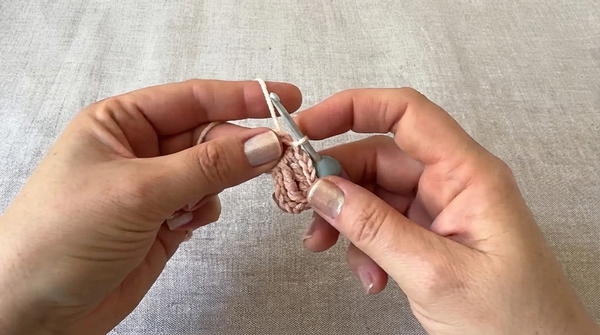
- Repeat the same process to create a total of 6 petals, ensuring they are evenly spaced around the ring.
- For the 5th and 6th petals, alternate their structure to include only 4 chain segments to facilitate joining later.
2. Joining Subsequent Flowers
Creating the Ring for the Next Flower
- After completing the 5th petal of the first flower:
- Ch 15 (to “travel” to the next flower).
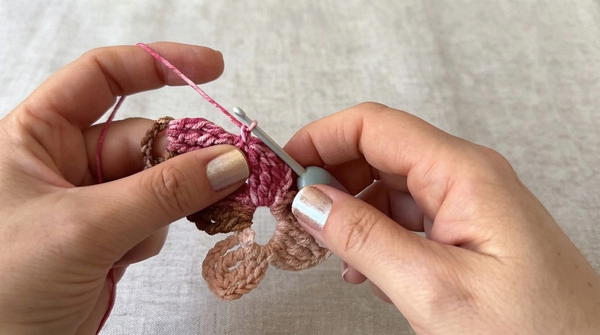
- Count back 9 chains and join with a Sl St to form the new ring.
- Ch 15 (to “travel” to the next flower).
Building Subsequent Flowers
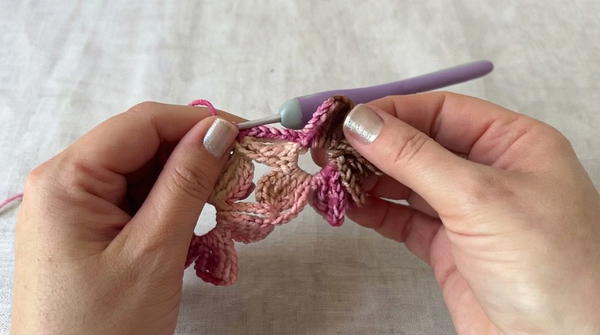
- Work the petals of the new flower using the exact construction as the first flower.
- Join petals: Pull the working loop through a corresponding petal from the adjacent flower (e.g., the peak of the petal in the previous flower) as you work a petal in the new flower.
3. Completing the Rows
Finalizing Petals in Backward Pass
- Once you reach the end of your row, turn and work back in the opposite direction to complete any remaining chain segments or unfinished petals.
- Flowers along the edges should include only 4 petals to create straight edges along rows.
4. Second and Subsequent Rows
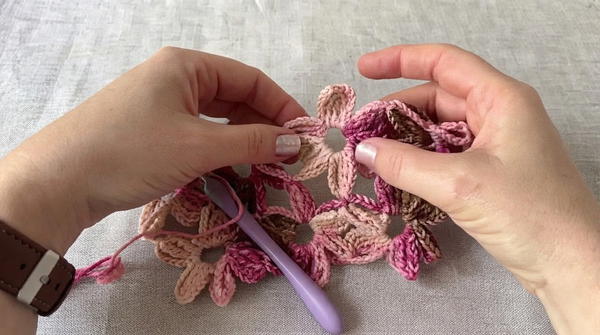
Edge Flowers
- Flowers on the edges or corners are constructed to include 4 petals, maintaining the straight edge of the fabric.
Joining Flowers in New Rows
- As you work a new row, attach the 2nd, 3rd, and 4th petals of each flower to the peaks of petals in the row below.
Building Checkerboard-Like Layout
- Position flowers in alternating rows, maintaining a checkerboard floral pattern to evenly distribute motifs across the fabric.
5. Finishing
Row-by-Row Construction
- Repeat the process for as many rows as required, depending on the desired project size.
- Finish incomplete petals along the edges using a backward pass technique described earlier.
Clean Edge Finishing
- Once all rows are complete, fasten off any remaining yarn tails and weave them into the floral motifs using a yarn needle.
Blocking and Customization
- Block the finished fabric gently to even out edges and ensure uniformity across motifs.
- Optionally, use this design to create blankets, wraps, or wall hangings—adjusting dimensions as needed.
Conclusion
The continuous flower motif crochet method provides a seamless way to create floral patterns with fewer interruptions and yarn tails. By utilizing interconnected flowers, this design balances elegance with efficiency, making it ideal for unique project ideas such as shawls, table runners, or decorative art.