Level up your crochet skills with this Free Crochet Triangle Pattern that's for crocheting modern accessories and stylish hand-crocheted designs.
Learning crochet becomes more enjoyable with projects that are simple yet rewarding, and this free crochet triangle pattern fits the bill perfectly. Designed especially for beginners, it offers a great way to practice basic stitches while creating a charming piece that can be used in many ways.
This pattern belongs to the accessory and motif project type, ideal for crocheting items like scarves, shawls, or decorative patches. Its style is classic and clean, featuring neat rows that gradually expand to form a perfect triangle. The texture is soft with a gentle firmness that helps the shape hold well without feeling stiff. One of its most attractive features is its flexibility, you can customize the size easily, making anything from small accents to large wraps.
Free Crochet Triangle Pattern for Projects
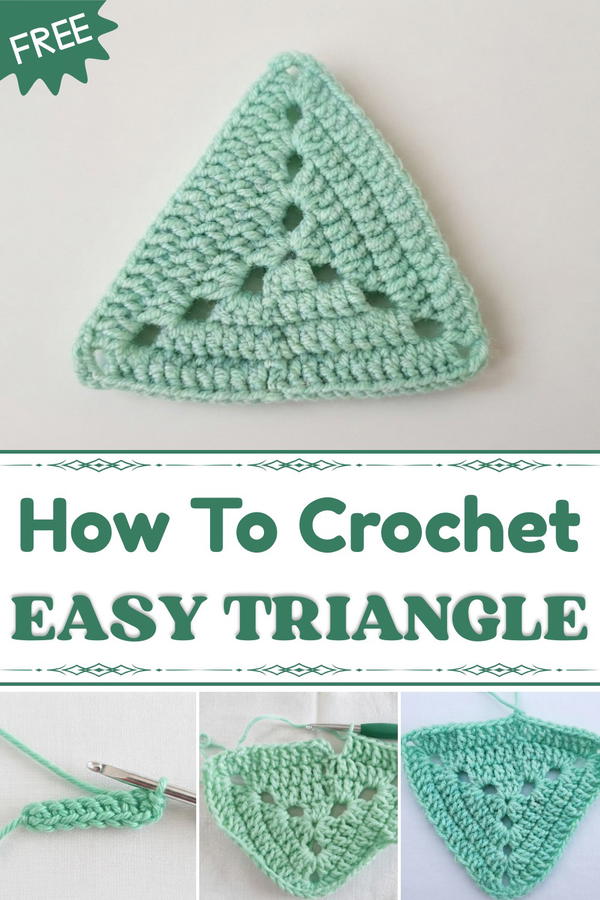
The construction involves working in increasing rows to build the triangle’s shape, a helpful method for beginners to learn stitch increases and row counting. To achieve the best results, maintaining consistent tension is key for smooth edges. Using medium-weight yarn, such as cotton or acrylic, complements the stitch texture beautifully by highlighting the pattern and providing a comfortable feel.
Inspired by geometric shapes and simplicity, this pattern invites creativity and personalization. It’s suitable for gifting during holidays, birthdays, or simply as a thoughtful handmade surprise. The free crochet triangle pattern encourages experimenting with colors and sizing, making each piece uniquely yours while boosting your crochet confidence.
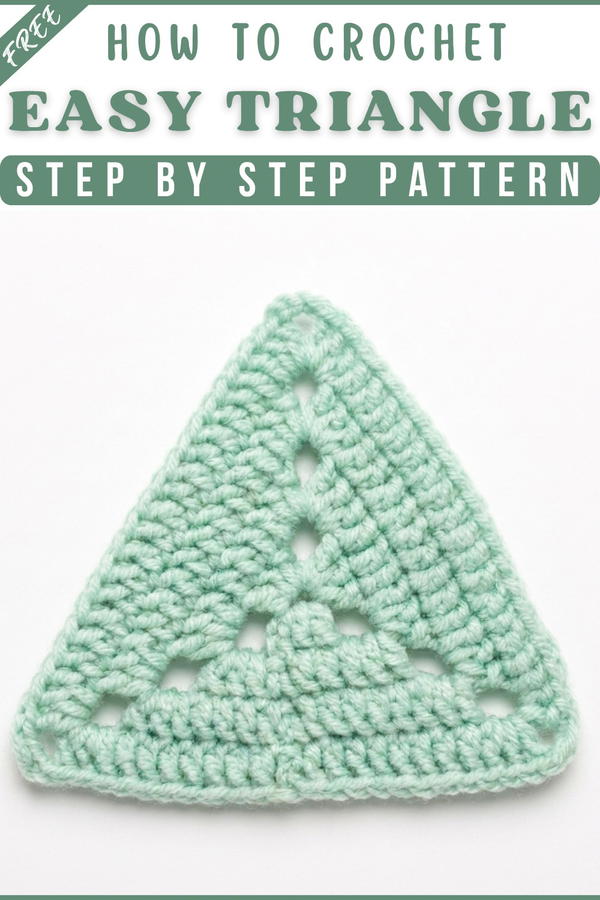
Crochet Beginner Triangle Pattern (Using US Double Crochet)
Creating a classic crochet triangle is an excellent way to practice foundational stitches, understand increases, and make a useful, versatile motif. This triangle pattern grows from the center out in rounds, using double crochet (dc) stitches and corner chains for smooth increases. The finished piece can function as a bunting, a motif for afghans, shawls, or be expanded to any size.
Basic Points About This Pattern
Key Features:
- Worked in the round from the center outward
- Uses only double crochet (dc) and chain stitches
- Shaped with chain spaces at the corners for even growth
- Easily resized by working more or fewer rounds
- Adaptable to any yarn weight, with adjustments to chain counts in corners
- Ideal for practicing the magic ring technique (optional start)
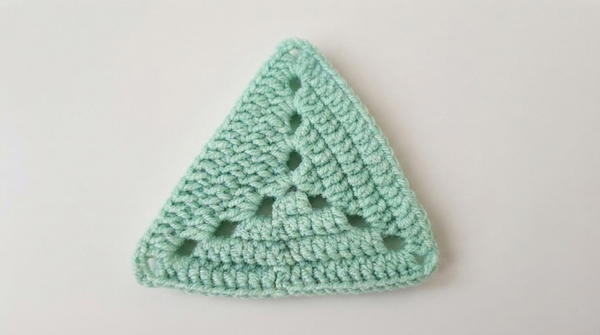
Special Notes
- Chain numbers at the corners can be adjusted based on yarn thickness: use chain-3 for worsted weight, or chain-4 for chunky or bulky yarn. This makes turning the corners smooth and prevents cupping.
- Double crochet references are given using US terms; UK users should substitute with treble crochet (tr).
- If you have difficulty with the magic ring, use a simple chain-4 and slip stitch to make the starting ring.
- Final triangle size depends on yarn and number of rounds worked.
- Use the starting chain (usually chain-3) in each round as the first double crochet of the row.
Skill Level
Beginner
This pattern is designed for absolute beginners. It uses basic stitches, easy construction, and clear repeatable steps. No advanced shaping or complex techniques are involved.
Materials
- Yarn: Worsted weight (10-ply) or chunky (12-ply) yarn, any color
- Hook: Size to suit your yarn (generally 5.0mm for worsted, or 6.0–8.0mm for thicker yarns)
- Tapestry Needle: For weaving in ends
- Scissors
Measurements / Sizing
- Size depends on yarn, hook, and number of rounds.
- Using worsted yarn and a 5.0mm hook over four rounds: expect a triangle around 6-7 inches per side.
- Add more rounds to increase size; each new round will make the triangle larger.
Gauge
- Gauge is not critical for motifs like this, but for reference:
In worsted yarn with a 5.0 mm hook, one triangle side after 4 rounds = approx. 6.5” (16.5 cm), with 9 dc stitches per side excluding corners.
Stitch Abbreviations (US Terms)
- ch: chain
- sl st: slip stitch
- dc: double crochet
- sp: space
- st(s): stitch(es)
Special Stitches
- Magic Ring: Create a loop and work the first round into it to begin. Alternatively, use: ch 4, sl st in first ch to form a ring.
- Corner Cluster: [3 dc, ch 3, 3 dc] — all worked into the same corner chain space.
Pattern
Getting Started
- Begin with a magic ring. If preferred, chain 4 and join with a slip stitch to form a ring.
- Chain 1 to secure, then chain 2 more (counts as the first double crochet).
Round 1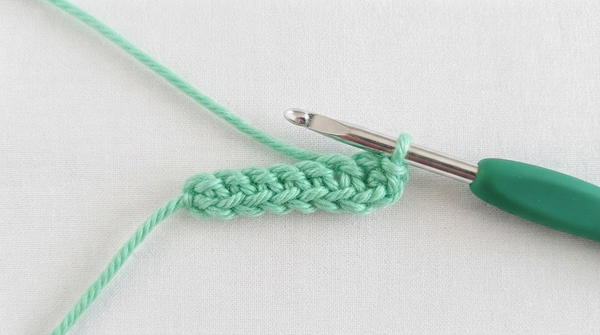
- Work 2 dc into the ring (with starting chain-2, total 3 dc).
- Chain 3 (corner).
- 3 dc into the ring.
- Chain 3 (corner).
- 3 dc into the ring.
- Chain 3 (corner).
- Slip stitch to top of initial chain (counts as first dc) to join round.
- Pull the magic loop tail to tighten (if using magic ring).
Round 2
- Chain 3 (counts as first dc).
- 1 dc in each of next 2 stitches (these are the dc from previous round).
- In the first chain-3 corner space:
- Work 3 dc, chain 3, 3 dc (corner cluster).
- 1 dc in each of next 3 stitches (side from previous round).
- In next corner space:
- Work 3 dc, chain 3, 3 dc.
- 1 dc in each of next 3 stitches.
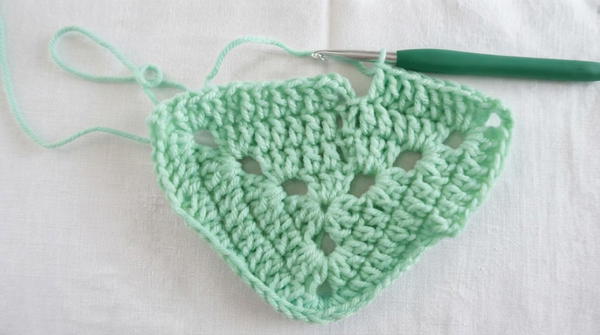 In last corner space:
- Work 3 dc, chain 3, 3 dc.
- Slip stitch to the top of starting chain to join.
Round 3
- Chain 3 (counts as first dc).
- Dc in each dc across to next corner. You will now have 9 stitches along each side before each corner.
- In each corner (ch-3 space):
- Work 3 dc, chain 3, 3 dc.
- Repeat this (dc in each stitch, corner in corner space) until you reach beginning of round.
- Slip stitch to top of beginning ch-3 to join.
Round 4
- Chain 3 (counts as first dc).
- Dc in each dc across the side.
- In each corner (chain-3 space):
- Work 3 dc, chain 3, 3 dc.
- Continue: Work 1 dc in each stitch across the side, repeat corner cluster in each corner.
- Complete the round; join with slip stitch to top of starting chain-3.
- Fasten off and weave in all yarn ends.
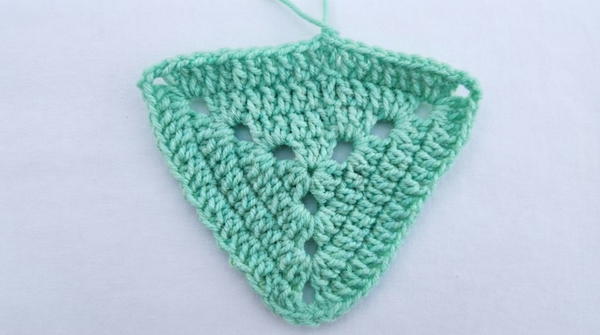
Assembly
No separate assembly is needed. Your triangle is seamless and ready to use as a motif, applique, part of bunting, shawl, or other projects. If working multiple triangles, block them for even edges before joining in your larger project.
Conclusion
Mastering this basic triangle unlocks a wide array of creative crochet options. This motif provides a solid foundation for larger and more intricate patterns, allowing you to adapt it into multi-piece projects, layering, or decorative elements. By completing and repeating this triangle pattern, crafters gain confidence with double crochet, increases, and working in the round— all key skills for many future projects. Customize your triangles with color changes, border rows, or add embellishments for a personal touch on gifts or decor!